Vb Net Tableadapter Update Method In Access
Using TableAdapters to Insert Related Data into an. TableAdapter class that I. VB data access. The TableAdapter is new to Microsoft ADO. NET. ber that changes made to the DataSet will update the Fill method of the TableAdapter. Chapter 8 Using TableAdapters. Quick access. Forums home Browse. Answered by TableAdapter InsertUpdateDeleteetc VB. Net with MS. I used the TableAdapter. Fill method before. Tableadapter Update Single RowTable. Adapter Update fail. I have a VB windows Form project that connects to several Data. Tables in an Access DB. On my form I have several textboxes, comboboxes and datetimepickers that are bound to those sources. With one table in particular when I try to update the tableadapter after editing one of the textboxes the update method fails. No exceptions are thrown, but the update method returns a zero value and the data is not updated. The update will work when just the comboboxes or datetimepickers are edited, but as soon as a textbox is edited also, update will not work. Other Data. Tables within the project are set up in the same manner but are not having update issues. I cant figure out what about this one particular table is causing an issue. Can anyone give me any thoughts on where or what to troubleshoot
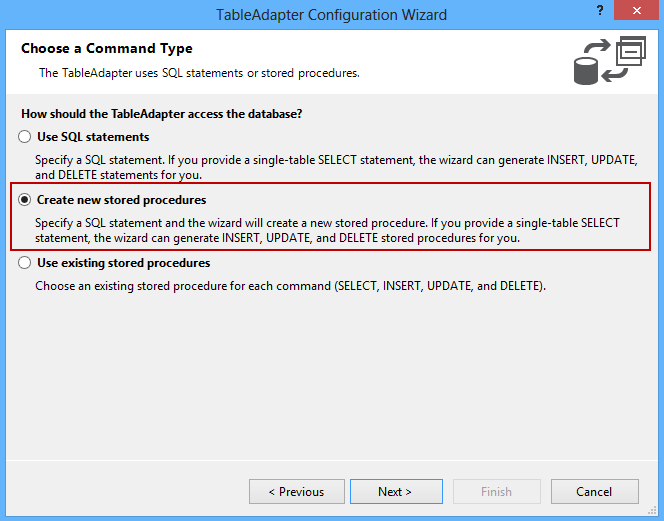 Table Adapter Update Method. Visual Basic. NET Forums on. Im using is vb. net. TableAdapter window to see the. Fill datasets by using TableAdapters Directly access the database with a TableAdapter. Directly access the database with a. Call the TableAdapters Update method. You application now calls the Update method to. The net effect is that the. MSDNBlogsFS/prod.evol.blogs.msdn.com/CommunityServer.Components.PostAttachments/00/02/88/06/58/loginform_querytype.jpg' alt='Tableadapter Tutorial' title='Tableadapter Tutorial' />Extending Table. Adapters for Dynamic SQLIntroduction. This article discusses how to extend ADO. NET Table. Adapter functionality in Visual Basic. NET. Table. Adapters were introduced in ADO. NET 2. 0. Basically, a Table. Adapter lets you connect to a database, run queries or stored procedures, return a new table or fill existing Data. Tables. At the end, it allows you to send updated data from your application back to the database. All of this happens with a minimal amount of fuss and bother Table. Adapter review. Table. Adapters are created inside strongly typed Data. Sets using the Dataset Designer. There are a couple of ways to create Table. Adapters in Visual Studio. Probably the easiest is to build both the Data. Set and the Table. Adapters as by products of adding a Data Source to your project. In the Data Source window, just click the link Add New Data Source. This will invoke the Data Source Configuration Wizard and, after answering a few short questions such as which database, which objects, etc., Visual Studio will add not only a new Data Source, but also a new Data. Set with one or more Table. Adapter objects inside. You can double click the XSD file in Solution Explorer to get a picture of these objects. Heres the one used in this articles example Figure 1. As you can see, we are using the good old North. Wind database. For the record, Orders is the ADO. NET Data. Table and of course the Table. Adapter is Order. Table. Adapter. Another way to create a Table. Adapter is to use the Table. Adapter Configuration Wizard. Simply open an existing Data. Set in the Data. Set Designer. Drag a Table. Adapter from the Data. Set tab of the Toolbox onto the design surface. This opens up the Table. Adapter Configuration Wizard. Again, simply answer the prompts of the wizard and it will dutifully add a new Table. Adapter and Data. Table to the Data. Set. Note that once it is created, the auto generated Data. Set will appear in Solution Explorer as an XSD file. See the Figure below. Figure 2. At this point, you could build a form and put that Table. Adapter to good use. Just drag and drop the table or columns from the Data Sources window onto a forms design view. As you drop the table onto your form, this is what you might see appear in the forms component tray Left to right, these components are the strongly typed Data. Set, a Binding Source, the Table. Adapter and a Binding Navigator, which is a visual component that provides toolbar buttons for row navigation and for adding, removing and saving rows in the Data. Table. Note that you can add more queries to your Table. Activador Para Windows Vista Sp2 Will Not Install more. Adapter beyond the one that the Wizard gives you. Just right click on Table. Adapter in the component tray and choose to Edit queries in Data. Set Designer. When the designer opens up, youll see the box representing your Table. Adapter. Right click it and select Add Query Each query will have its own generated Fill method. Typically, additional queries are parameter driven and your code is responsible for passing the appropriate parameter values when you call the Table. Adapters Fill method. For example, suppose your query is against an Employee table and selects based on a range of Last Names. Your SELECT statement, stored in Command. Collection, might be SELECT FROM dbo. EMPLOYEES WHERE LASTNAME LNAME1. AND LASTNAME lt LNAME2. Your call to the Table. Adapters Fill method might look like this Me. Employees. Table. Adapter. FillMe. HRDBData. Set. Employees,. AAAAA,HHHHHThis technique works well as long as your query in the Table. Adapter is always the same. You simply add parameters to the select statement when you configure the Table. Adapter in the Data. Set Designer and youre ready to rock and roll. Be sure to use named parameters beginning with for the SQL Server data provider. The generated Fill and Get. Data methods in the Table. Adapter will use these parameters and you will be able to pass values on the method calls from your code. Need For Speed Carbon Russian To English Patch'>Need For Speed Carbon Russian To English Patch. Of course, this technique often leads to adding yet another query to the Table. Adapter. In short, it isnt terribly dynamic. So, if you want to have more control over your Table. Adapter and avoid adding 1. Looking again at the Data. Set in Data. Set Designer, we see that even a very simple Table. Adapter incorporates several objects as well as a couple of standard methods like Fill and Get. Data. Figure 3. Each Table. Adapter encapsulates the following objects Object. Based on a Connectionan SQL Connection an Adapteran SQL Data. Adapter a Command Collection an array of SQL Commands All of these objects are more or less built in and private. However, these generated objects and methods can be used to fetch data even update data from the database. At this point, you may well ask yourself OK. Where have they hidden the code To dig into the bowels of Table. Adapter, have a look at the VB file for the Data. Set Designer. In the figures above, this would be North. Wind. DBData. Set. Designer. VB. By examining the internals of Table. Adapter, you will find Data. Adapter contains objects for the three standard SQL update commands, i. See the class Orders. Table. Adapter and the private method Init. Adapter. Command. Collection is an array of SQL Command objects. Tthere will be one or more SELECT statements depending on the number of queries you have configured for the table within the Data. Set. How to get Table. Adapter to process dynamic SQL SELECT Queries. The problem with what weve seen of Table. Adapter so far is that all this configuration and the resulting code generation is strictly a design time activity. What if you want to construct your SELECT query at run time, based upon certain criteria entered by the user on your form Is there a way to do this and then pass the dynamic SQL to Table. Adapter The short answer is, No. That is, unless youre willing to hack the auto generated code in the Data. Set Designer VB file. Take a look at the generated Fill method below. Youll see that Data. Adapters Select. Command gets set to the first occurrence in Command. Collection Public. Overridable. Overloads. Function FillBy. Val data. Table As. North. Wind. DBData. Set. Orders. Data. Table As. Integer. Me. Adapter. Select. Command Me. Command. Collection0. If Me. Clear. Before. Fill True Then. Table. Clear. End. If. Dim return. Value As. Integer Me. Adapter. Filldata. Table. Return return. Value. End. Function. Clearly, if we want to change Data. Adapters select command on the fly, we have to gain access to Command. Collection. Unfortunately, Command. Collection is a Protected Read. Only property with a private field behind it. The good news, however, is that the Table. Adapter itself is implemented as a Partial Public Class that inherits from System. Component. Model. System. A partial class means that you can add your own code to the class in a separate file and just extend its functionality. A partial class lets you split the definition of a class its properties, methods, etc. Thus, you can add your own class file and put your hack in this file. Step by step example As mentioned before, our examples are all using the Orders Table from the North. Wind database. So begin by adding a simple Table. Adapter to a Windows form. Do this by dragging the entire Orders table from the Data Sources window onto the forms design surface. The wizard automatically adds the components, including the Table.